
Dressage Saddles
Showing 1–9 of 25 results
-
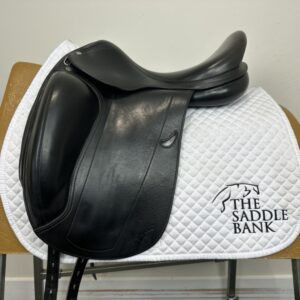
16 inch Equipe Emporio Monoflap Dressage Black Medium
$800.00 -
FAST SELLING
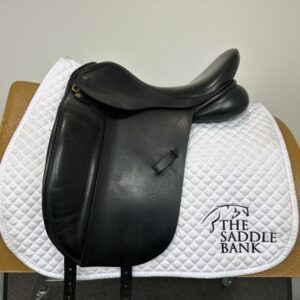
16 inch Ideal Suzannah Dressage Black Medium Wide
$700.00 -
FAST SELLING
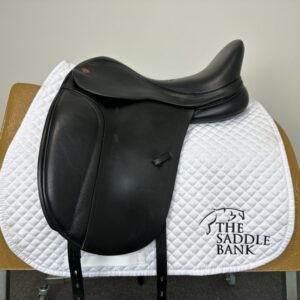
16.5 inch Kent and Masters S-Series Low Profile Dressage Moveable Block LDM Black Adjustable
$750.00 -
FAST SELLING
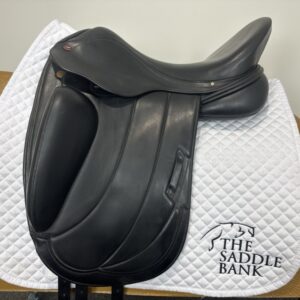
17 inch Albion Fabrento Monoflap Black Medium
$1,400.00 -
FAST SELLING
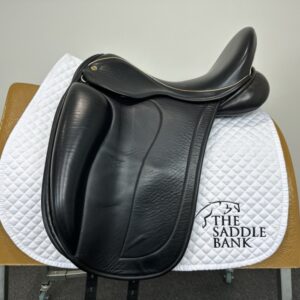
17 inch Black Country Adelinda Black Medium Wide
$750.00 -
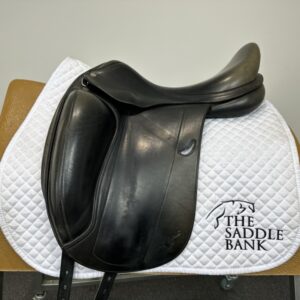
17 inch Equipe Emporio Monoflap Dressage Black Medium
$600.00 -
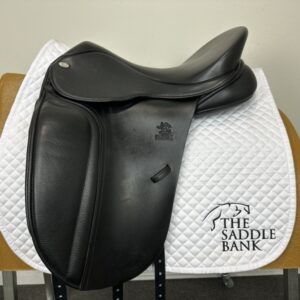
17 inch Fairfax Classic Open Seat Dressage MDO Black Adjustable
$1,000.00 -
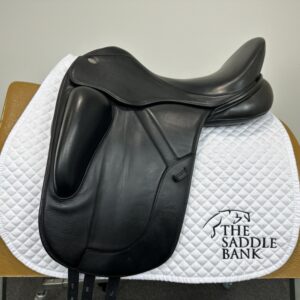
17 inch Fairfax Gareth Hughes MDG Black Adjustable
$1,300.00 -
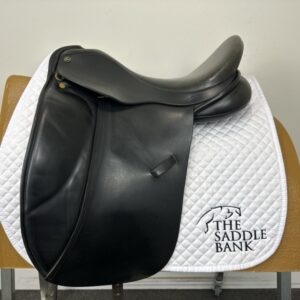
17 inch Ideal Tonishia Supreme Dressage Black Wide
$350.00
Dressage Saddles: Connection, Balance, and Total Harmony
Dressage is all about subtle communication. Unlike jumping saddles built for short stirrups and leaning forward, a dressage saddle is designed to help you sit deeply, stay balanced, and give quiet, precise aids.
Every detail—from the deep seat to the straight flap—is engineered to get you as close to your horse as possible while giving their shoulders and back complete freedom to move.
What Makes a Dressage Saddle Different?
-
Deep, Centered Seat: Places you directly over your seat bones so you stay upright, steady, and balanced without tipping forward or bracing in the stirrups.
-
Long, Straight Flaps: Designed for a long, relaxed leg, giving your calves full contact along your horse’s sides for subtle leg cues.
-
Supportive Knee Blocks: Placed to gently steady your leg without locking your knee or forcing your position.
-
Long Billet Systems: Long girth straps connect to a short girth down low. This gets bulky buckles away from under your thigh so there’s nothing between your leg and your horse.
Monoflap vs. Traditional Dual Flap
| Feature | Monoflap Saddles | Dual Flap Saddles |
| Design | Single leather flap—billets attach right to the bottom of the flap. | Classic double-flap layout with billets hidden underneath. |
| Feel | Close-contact connection with zero bulk under your leg. | Traditional, supportive feel with room for adjustable knee blocks. |
| Best For | Riders who want maximum feel and micro-precise leg aids. | Riders who prefer classic styling and easy adjustment with pads. |
Getting the Fit Right
A great dressage saddle should feel effortless for you and completely comfortable for your horse:
-
Shoulder Clearance: The tree points should sit a couple of inches behind the shoulder blade so your horse can extend fully without pinching.
-
Spine Protection: The gullet channel needs to be wide enough (usually 3 to 4 fingers) to keep pressure completely off the spine and back ligaments.
-
Level Balance: When girthed up, the lowest part of the seat should sit flat in the center. If it tips back, it presses into your horse’s loins; if it tips forward, it throws too much weight onto their shoulders.
-
Need Help Finding the Right Fit?
Every horse’s back is different. Whether you need wool flocking you can adjust, close-contact foam, or a changeable gullet tree, we’re here to help you match your horse’s shape and your riding style.
Dressage Saddles: Connection, Balance, and Total Harmony
Dressage is all about subtle communication. Unlike jumping saddles built for short stirrups and leaning forward, a dressage saddle is designed to help you sit deeply, stay balanced, and give quiet, precise aids.
Every detail—from the deep seat to the straight flap—is engineered to get you as close to your horse as possible while giving their shoulders and back complete freedom to move.
What Makes a Dressage Saddle Different?
-
Deep, Centered Seat: Places you directly over your seat bones so you stay upright, steady, and balanced without tipping forward or bracing in the stirrups.
-
Long, Straight Flaps: Designed for a long, relaxed leg, giving your calves full contact along your horse’s sides for subtle leg cues.
-
Supportive Knee Blocks: Placed to gently steady your leg without locking your knee or forcing your position.
-
Long Billet Systems: Long girth straps connect to a short girth down low. This gets bulky buckles away from under your thigh so there’s nothing between your leg and your horse.
Monoflap vs. Traditional Dual Flap
| Feature | Monoflap Saddles | Dual Flap Saddles |
| Design | Single leather flap—billets attach right to the bottom of the flap. | Classic double-flap layout with billets hidden underneath. |
| Feel | Close-contact connection with zero bulk under your leg. | Traditional, supportive feel with room for adjustable knee blocks. |
| Best For | Riders who want maximum feel and micro-precise leg aids. | Riders who prefer classic styling and easy adjustment with pads. |
Getting the Fit Right
A great dressage saddle should feel effortless for you and completely comfortable for your horse:
-
Shoulder Clearance: The tree points should sit a couple of inches behind the shoulder blade so your horse can extend fully without pinching.
-
Spine Protection: The gullet channel needs to be wide enough (usually 3 to 4 fingers) to keep pressure completely off the spine and back ligaments.
-
Level Balance: When girthed up, the lowest part of the seat should sit flat in the center. If it tips back, it presses into your horse’s loins; if it tips forward, it throws too much weight onto their shoulders.
-
Need Help Finding the Right Fit?
Every horse’s back is different. Whether you need wool flocking you can adjust, close-contact foam, or a changeable gullet tree, we’re here to help you match your horse’s shape and your riding style.